

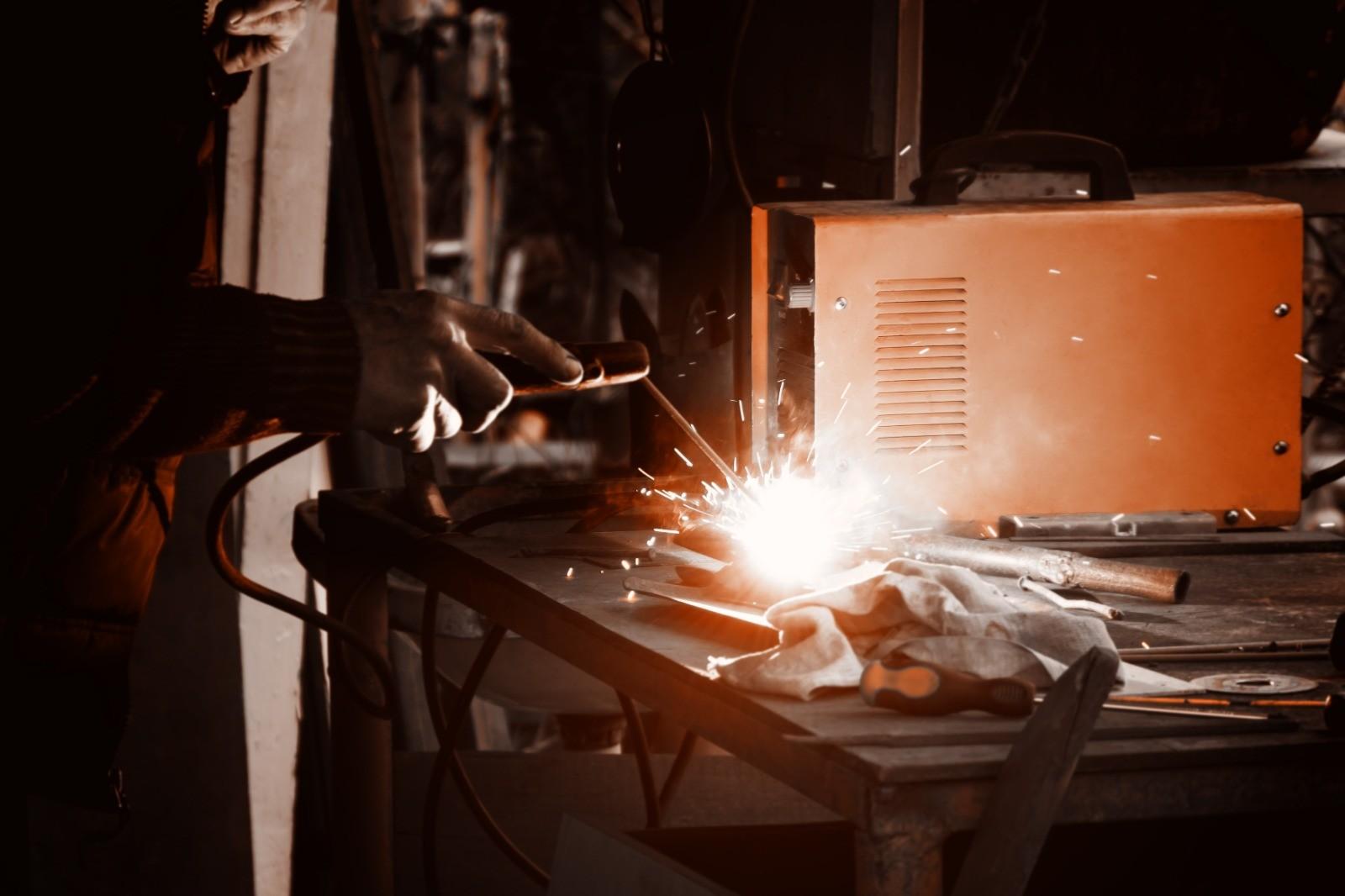
Choosing the right welding machine is not just about buying equipment. It is about matching the welding process to your material, environment, and skill level. After working with fabrication workshops, construction sites, and maintenance teams, one thing is clear. The wrong welder leads to poor weld quality, rework, and higher costs.
This guide explains types of welding machines, how they work, and how to choose the right one with confidence. Whether you are a beginner or an industrial buyer, this article is written to help you make an informed decision backed by real world application.
What Is a Welding Machine and How Does It Work
A welding machine generates controlled heat to fuse metals or thermoplastics together. The heat is created using electrical current, gas, or resistance depending on the welding process. Most modern machines convert incoming power into a stable welding arc.
Understanding the welding process is more important than the machine size. A compact inverter welder can outperform a large transformer unit if it matches your application. This is why professional welders always choose process first, machine second.
Main Types of Welding Machines by Process
These welding machines are classified based on the welding process they use to generate heat and fuse materials. Understanding each process helps you select the right machine for your application, material type, and working environment.
MIG Welding Machines (Gas Metal Arc Welding – GMAW)
MIG welding machine technology uses a continuously fed wire electrode with shielding gas. It is widely used in fabrication shops due to speed and ease of use.
This process works best for mild steel, stainless steel, and aluminum. In automotive body repair and light fabrication, MIG welding delivers clean welds with minimal post work.
Pros
- Fast welding speed
- Easy to learn
- Clean and consistent welds
Cons
- Less suitable for outdoor use
- Requires shielding gas
If you are setting up a workshop or upgrading production, explore professional-grade options for a reliable MIG Welding Machine designed for consistent performance.
TIG Welding Machines (Gas Tungsten Arc Welding – GTAW)
A TIG welding machine uses a non consumable tungsten electrode and inert gas. It offers precise control over the weld puddle, making it ideal for thin materials.
In industries like aerospace, food grade piping, and stainless steel fabrication, TIG welding is trusted for strength and appearance. For applications requiring clean finishes and control, you can browse industrial-quality TIG Welding Machines built for demanding workloads.
Pros
- High precision welding
- Excellent weld appearance
- Ideal for thin metals
Cons
- Slower process
- Requires advanced skill
Stick Welding Machines (Shielded Metal Arc Welding – SMAW)
Stick welding machine systems, also known as arc welding machines, use flux coated electrodes to create an electric arc for welding. They perform reliably in harsh conditions and are widely used on construction sites and outdoor projects.
This welding process is forgiving on dirty, rusty, or painted metal surfaces. Maintenance and repair crews prefer stick or arc welders where working conditions are unpredictable and power stability is limited.
Pros
- Works outdoors
- Handles dirty metal
- Low equipment cost
Cons
- More slag cleanup
- Less aesthetic welds
For construction and maintenance projects, sourcing from trusted ARC welding suppliers in UAE ensures durability and reliable arc performance.
Flux Cored Welding Machines (FCAW)
A flux cored welding machine is similar to MIG but uses tubular wire filled with flux. It can be used with or without gas depending on the wire type.
Structural steel fabrication and heavy equipment repair benefit from flux cored welding due to deep penetration and high deposition rates.
Pros
- Deep weld penetration
- Performs well outdoors
Cons
- More fumes and spatter
- Additional slag cleanup
Submerged Arc Welding Machines (SAW)
Submerged arc welding machine systems are fully automated and used in heavy industry. The arc is hidden under granular flux, reducing spatter and fumes.
This process is common in shipbuilding, pressure vessels, and large diameter pipelines where long continuous welds are required.
Pros
- High deposition rates
- Consistent weld quality
Cons
- Limited welding positions
- High setup cost
Multi Process Welding Machines
A multi process welding machine combines MIG, TIG, and Stick welding in one unit. It is ideal for workshops handling diverse projects.
For contractors and repair shops, a single machine offering multiple processes reduces equipment costs and improves flexibility.
Pros
- Supports multiple welding processes
- Reduces overall equipment cost
Cons
- Higher upfront investment
- Not ideal for continuous heavy production
Specialized Welding Machines
- Spot Welding Machines: Uses electrical resistance to join thin metal sheets in automotive manufacturing
- Plasma Welding Machines: High energy precision welding used where tight tolerances are required
- Laser Welding Machines: Focused heat welding for automation, electronics, and minimal distortion applications
- Polyfusion Welding Machines: Designed for plastic pipe welding in plumbing and pipeline infrastructure
Types of Welding Machines by Power Source
- Inverter Welding Machines: Lightweight, energy efficient, and ideal for portable and field welding applications
- Transformer Welding Machines: Heavy duty machines designed for continuous industrial welding operations
- Engine Driven Welding Machines: Self powered welders used for remote sites where grid electricity is unavailable
Key Factors to Consider When Choosing a Welding Machine
Selecting the right welding machine requires evaluating practical factors that directly affect weld quality, productivity, and long-term cost. These considerations help ensure the machine matches both current and future welding needs.
Material Type
Different metals require specific welding processes. Using the correct process prevents weak welds and distortion.
Material Thickness
Thin metals need precise heat control, while thick steel requires higher amperage and deeper penetration.
Skill Level
MIG welding is suitable for beginners, while TIG welding is best for experienced operators.
Work Environment
Indoor welding supports gas-shielded processes, while outdoor conditions favor Stick and Flux-Cored welding.
Power Supply
Machine selection depends on single-phase, three-phase, or off-grid power availability.
Portability
Portable inverter welders suit field work, while heavy machines are ideal for fixed industrial setups.
Duty Cycle
High duty cycle machines are essential for continuous industrial welding operations.
Budget and Value
Investing in the right machine improves durability, productivity, and long-term cost efficiency.
MIG vs TIG vs Stick vs Flux-Cored Welding Machines Comparison
MIG welding is best for speed and production work. TIG welding excels in precision and appearance. Stick welding remains unmatched for outdoor and heavy duty repairs.
Choosing the right process saves time, reduces defects, and improves weld integrity.
| Welding Machine Type | Best For | Skill Level | Material Thickness | Indoor / Outdoor Use | Cost Range |
| MIG Welding Machine | Fabrication, automotive repair | Beginner to intermediate | Thin to medium | Best indoors | Medium |
| TIG Welding Machine | Precision welding, stainless steel | Advanced | Thin materials | Indoor | High |
| Stick Welding Machine | Construction, repairs, heavy steel | Beginner to professional | Medium to thick | Indoor and outdoor | Low |
| Flux-Cored Welding Machine | Structural steel, outdoor welding | Intermediate | Thick materials | Indoor and outdoor | Medium |
Common Mistakes to Avoid When Buying a Welding Machine
Many buyers choose machines based on price instead of application. Ignoring duty cycle and amperage requirements leads to overheating and downtime.
Another mistake is buying entry level machines for industrial use. Always plan for future workload and material range.
Welding Machine Applications by Industry
Automotive workshops prefer MIG and spot welding. Construction sites rely on stick and engine driven welders. Manufacturing plants invest in TIG, laser, and submerged arc systems for quality and efficiency.
Understanding industry needs ensures better purchasing decisions.
AI Overview
This guide explains the main types of welding machines, their uses, and key selection factors to help beginners and professionals choose the right welder based on material, application, power source, and skill level.
FAQs
What are the 4 types of welding machines?
The four main welding machine types are MIG, TIG, Stick, and Flux Cored welding machines. Each is designed for specific materials, environments, and skill levels.
How to choose the right welding machine?
Choose a welding machine based on material type, thickness, work environment, power availability, and operator skill level. Matching the process to the application ensures stronger and cleaner welds.
What is 1G, 2G, 3G, 4G, 5G, 6G welding?
These are welding position classifications that define the orientation of the weld joint during testing or production. Higher positions like 5G and 6G require advanced skill and certification.
Which type of welding machine is best?
The best welding machine depends on the job requirements, material, and environment. MIG is ideal for beginners, TIG for precision work, and Stick for heavy duty or outdoor welding.
Conclusion
Choosing the right welding machine is about understanding your application, material type, work environment, and long-term production needs. When the welding process aligns with the correct machine, it improves weld quality, efficiency, and overall project reliability.
Whether you are setting up a workshop, handling industrial fabrication, or managing on-site repairs, informed selection prevents costly mistakes and ensures consistent performance.
Looking for reliable welding solutions tailored to your industrial needs? NGEN Global delivers advanced welding machines, expert technical support, and precision-driven solutions across multiple industries in UAE, Saudi Arabia, Oman, and Kenya. Contact our team today for professional guidance and a fast quotation from trusted welding specialists.
