

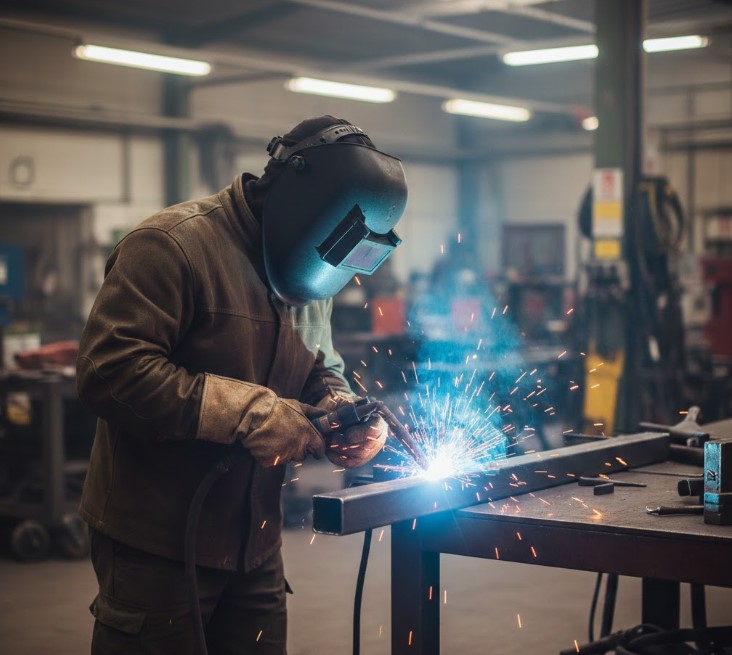
MIG welding, also known as Metal Inert Gas welding or Gas Metal Arc Welding (GMAW), is a widely used welding process in industries and workshops. It employs a continuous solid wire electrode fed through a welding gun, while an inert or semi-inert shielding gas protects the weld pool from contamination.
Understanding MIG welding basics, equipment, techniques, and safety considerations is essential for beginners and professionals alike.
What is MIG Welding
MIG welding is valued for its speed, versatility, and ease of learning, making it a popular choice for automotive, construction, manufacturing, and DIY projects.
- Precision and Control: MIG welding provides clean, consistent welds with minimal spatter.
- Material Compatibility: Works on steel, stainless steel, and aluminum.
- Industry Standards: Adheres to AWS (American Welding Society) codes and ISO welding standards, ensuring reliable and durable joints.
Whether you are a hobbyist or an industrial welder,MIG welding machines offer a balance of efficiency, quality, and cost-effectiveness for every project.
MIG Welding Key Components
A proper MIG welding setup is crucial for successful welding. Key components include:
- MIG Welding Machine: Provides the necessary current and controls for wire feed speed and voltage. It is the core component that determines arc stability, weld penetration, and overall welding performance.
- Welding Gun and Cable: Directs the wire electrode and shielding gas precisely to the weld joint. A well-designed gun improves control, comfort, and consistency during welding tasks.
- Wire Electrode: Available in steel, aluminum, and stainless steel types selected according to material and thickness. Selecting the right electrode and shielding gas improves weld quality, and sourcing premium consumables ensures long-lasting, clean, and strong welds.
- Shielding Gas: Typically argon, CO₂, or mixed gases that protect the weld pool from contamination. Proper gas selection prevents oxidation and ensures clean, durable welds.
- Workpiece Preparation: Clean, degreased, and correctly aligned materials allow better penetration and fusion. Proper preparation reduces porosity, improves strength, and increases weld reliability.
A correct setup improves weld quality, safety, and productivity, especially for beginners learning MIG welding basics.
How MIG Welding Works
MIG welding uses an electric arc between the wire electrode and the workpiece to create a molten pool. The process can be summarized in steps:
- Power On: The MIG welding machine supplies electricity to the welding gun.
- Arc Creation: Contact between the wire electrode and the metal workpiece forms an electric arc.
- Molten Pool Formation: Heat from the arc melts both the electrode and the base metal, creating a weld pool.
- Shielding Gas Protection: Inert or semi-inert gas surrounds the arc, preventing contamination from oxygen or nitrogen.
- Solidification: The molten pool cools to form a strong, clean weld.
This continuous wire feed and gas shielding make MIG welding faster and easier than stick welding, especially for thin to medium metals.
Types of MIG Welding Machines
MIG welding machines vary based on current type, power, and intended use:
Manual MIG Welders
Ideal for hobbyists and beginners, these machines provide full control over torch movement and welding speed. They are commonly used for light fabrication, repairs, and DIY workshop projects.
Semi-Automatic MIG Welders
These systems automatically feed the wire electrode while the operator controls arc positioning. They balance ease of use with precision, making them popular in automotive and maintenance work.
Industrial MIG Welders
Designed for heavy-duty production, these machines support high duty cycles and multiple wire sizes. They are widely used in manufacturing, fabrication plants, and structural welding environments.
For professionals seeking consistent performance and precision, models such as the NGEN-MIG400 W/T offer reliable wire feed, voltage control, and durability, making them ideal for demanding welding tasks.
Multi-Process Welding Machines
These versatile units combine MIG, TIG, and Stick welding functions in one system. They are ideal for professionals who need flexibility for different materials and welding applications.
Brands like Lincoln Electric, Miller, and ESAB offer machines with ISO compliance, warranties, and support, ensuring reliability in industrial or home workshops.
MIG Welding Machine Types Comparison
| Type | Best For | Skill Level | Key Advantage |
| Manual MIG | DIY repairs | Beginner | Full control |
| Semi-Automatic | Workshops | Intermediate | Balanced precision |
| Industrial MIG | Fabrication | Professional | High output |
| Multi-Process | Versatile jobs | All levels | Multiple welding modes |
MIG Welding Tips for Beginners
Beginners can achieve better results by following practical tips:
- Correct Settings: Adjust voltage and wire feed speed according to metal thickness and wire type.
- Proper Technique: Maintain a consistent gun angle (15–20°) and travel speed.
- Clean Materials: Remove rust, paint, or oil from the workpiece before welding.
- Practice Beads: Start with straight beads on scrap metal to build confidence and consistency.
- Safety First: Use welding helmets, gloves, and protective clothing. Ensure proper ventilation for shielding gases.
Following these tips reduces common welding defects, such as porosity, burn-through, or poor penetration.
MIG Welding: With Gas vs. Without Gas
MIG welding can be performed either with an external shielding gas or without gas using flux‑cored wire, depending on the application and environment.
- Gas-Shielded MIG Welding: Uses gases like argon, CO₂, or mixtures to protect the molten weld pool from contamination. This produces clean, smooth welds with minimal spatter, making it ideal for thinner metals and indoor projects.
- Gasless MIG Welding (Flux-Cored): Uses flux‑cored wire that generates its own shielding gas when melted. This method is portable, tolerates outdoor or windy conditions, and works well on thicker metals, though it may produce more spatter and requires slag cleanup.
Understanding the differences between these two approaches helps beginners choose the right MIG welding setup for their specific project and work environment.
Choosing the Right MIG Welding Machine
When selecting a MIG welding machine, consider:
1- Material Type and Thickness
Thicker metals require higher amperage and stronger arc output. Matching machine power with material ensures proper penetration and weld strength.
2- Duty Cycle
This indicates how long a welder can run continuously before cooling. Higher duty cycles are essential for industrial or extended welding tasks.
3- Portability
Compact machines suit DIY users and mobile repairs. Larger industrial welders offer durability and power but are heavier to transport.
4- Wire and Gas Compatibility
Ensure compatible wire electrodes and shielding gases are readily available locally. Proper compatibility prevents workflow delays and improves weld quality.
5- Budget and Warranty
Choose certified machines with solid warranty coverage for reliability. Investing in quality equipment reduces maintenance costs and downtime.
6- Supplier Reliability
Sourcing from a trusted MIG welding equipment supplier ensures authentic products, technical support, and access to genuine replacement parts.
MIG Welding Applications
MIG welding is used across multiple industries due to its versatility:
- Automotive Repairs: Bodywork, chassis repair, and custom fabrication.
- Construction and Fabrication: Steel frameworks, aluminum structures, and fencing.
- Manufacturing: Industrial equipment, machinery, and assembly lines.
- Hobby Projects: DIY furniture, metal art, and home repairs.
Its speed and ease of use make MIG welding a preferred choice for both beginners and professionals.
FAQs
What is MIG welding used for?
MIG welding is used for joining metals like steel, aluminum, and stainless steel in fabrication, automotive repair, and construction. It’s popular because it is fast, clean, and easy to learn.
Is MIG welding good for beginners?
Yes, MIG welding is considered the easiest welding method to learn. Its automatic wire feed and stable arc make it ideal for first-time users and DIY projects.
Do you need gas for MIG welding?
Standard MIG welding requires shielding gas to protect the weld from contamination. However, gasless MIG (flux-core) can be used outdoors or in windy conditions.
What should I look for when buying a MIG welding machine?
Check amperage range, duty cycle, material compatibility, and build quality. Also ensure warranty coverage and availability of consumables and spare parts.
Conclusion
Understanding MIG welding, its working principles, machine types, and selection factors helps both beginners and professionals achieve stronger, cleaner, and more efficient welds. Choosing the right equipment, maintaining proper setup, and sourcing from dependable suppliers ensures consistent performance, safety, and long-term value for any welding application.
For reliable MIG welding machines, genuine accessories, and expert technical support in UAE, NGEN Global is a trusted source for quality equipment and professional guidance tailored to your project needs.
Contact our welding specialists for expert advice and fast, personalized quotations.
