

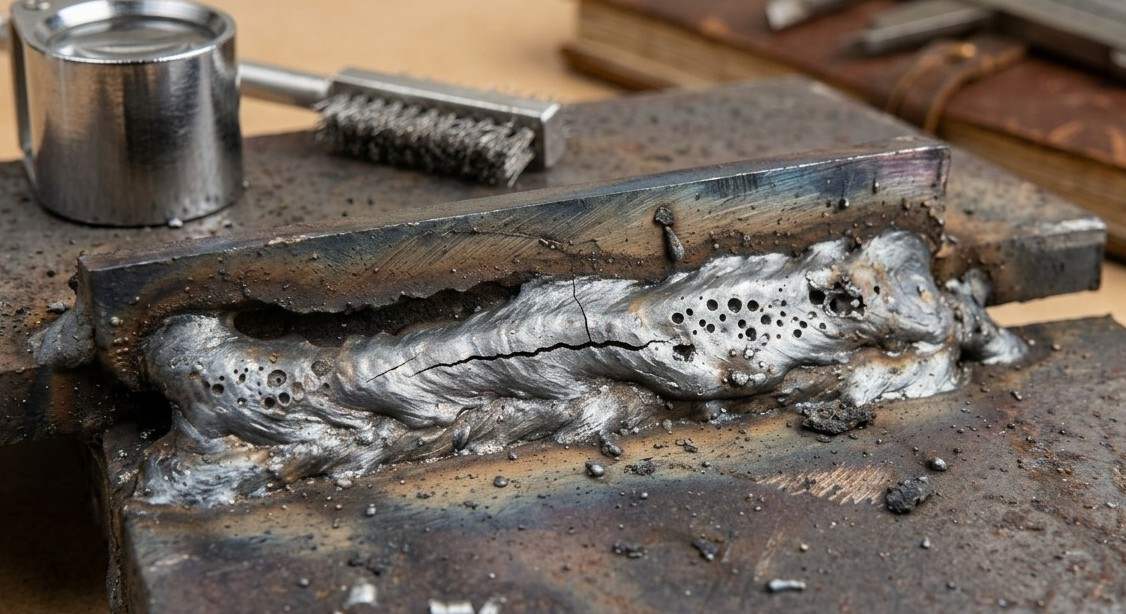
Every welder, no matter how experienced, has dealt with a weld that did not turn out the way they hoped. Welding looks simple from the outside, but small mistakes in heat, speed or cleaning can lead to weak joints that fail later. That is why understanding the 7 most common welding defects and ways to prevent them is so important for anyone working with metal, whether on a job site, in a workshop or on a large fabrication project.
In this guide, we will walk through the defects that show up most often, explain why they happen and share simple ways to avoid them.
What Are Welding Defects
A welding defect is any flaw that affects the strength, appearance or safety of a weld. Some defects are visible on the surface, while others hide inside the joint and can only be found through inspection methods like ultrasonic or radiographic testing. Left unchecked, these flaws can weaken a structure and lead to costly rework or even safety hazards.
Learning the 7 most common welding defects and ways to prevent them helps welders catch problems early and produce joints that hold up under real world stress.
1. Porosity
Porosity happens when gas becomes trapped inside the weld as it cools, leaving small holes or bubbles behind. It usually points to dirty metal, poor gas coverage or moisture in the filler material.
To prevent it, clean the base metal thoroughly before starting, check your shielding gas flow and store electrodes in a dry place. A steady, controlled travel speed also gives trapped gas time to escape before the weld pool solidifies.
2. Cracks
Cracks are among the most serious defects because they can spread and cause the entire joint to fail. They often form due to rapid cooling, high stress, hydrogen contamination or the wrong filler material.
Preheating the base metal, using compatible filler metals and controlling the cooling rate all help reduce the risk. Following a proper welding procedure from start to finish makes a big difference here.
3. Undercut
Undercut appears as a groove along the edge of the weld where the base metal has been melted away without being properly filled. It usually comes from too much heat, high travel speed or an incorrect electrode angle.
Slowing down, adjusting the angle and reducing current can help the filler metal fill the joint evenly instead of leaving a weak notch behind.
4. Lack of Fusion
This defect occurs when the weld metal does not properly bond with the base metal or with a previous weld pass. It often results from low heat input, poor surface preparation or moving too quickly.
Increasing the current slightly, cleaning the joint area and keeping a consistent travel speed usually solves the problem.
5. Incomplete Penetration
Incomplete penetration means the weld did not reach all the way through the joint, leaving it weaker than it should be. This is common in thicker materials welded with too little current or too wide a root gap.
Adjusting the joint design, increasing amperage and slowing the travel speed can help the weld reach full depth.
6. Slag Inclusion
Slag inclusion happens when leftover slag from stick or flux cored welding gets trapped inside the weld metal instead of being cleaned away between passes.
Thorough cleaning between passes and maintaining the correct electrode angle go a long way toward avoiding this issue.
7. Spatter
Spatter refers to small droplets of molten metal that scatter around the weld area during the process. While it is mostly a cosmetic issue, heavy spatter can slow down production and requires extra cleanup time.
Adjusting voltage, maintaining a proper arc length and using the right shielding gas mixture all help keep spatter to a minimum.
Quick Reference Table
| Defect | Common Cause | Simple Fix |
| 1. Porosity | Trapped gas or moisture | Clean metal and check gas flow |
| 2. Cracks | Rapid cooling or high stress | Preheat and control cooling |
| 3. Undercut | Excess heat or fast speed | Reduce current and slow down |
| 4. Lack of Fusion | Low heat or dirty surface | Increase heat and clean joint |
| 5. Incomplete Penetration | Low current or wide gap | Adjust amperage and joint design |
| 6. Slag Inclusion | Poor cleaning between passes | Clean thoroughly each pass |
| 7. Spatter | Unstable arc or high voltage | Adjust settings and arc length |
How to Prevent Welding Defects Overall
Most welding problems come down to a handful of habits that make a real difference once they become routine.
- Always clean the base metal before starting a weld
- Use the correct amperage and travel speed for the material thickness
- Keep shielding gas flow steady and check for leaks
- Store consumables in a dry environment
- Inspect welds regularly, especially on structural or load bearing work
Building these steps into your daily process is really what the 7 most common welding defects and ways to prevent them comes down to. It is less about advanced technique and more about consistency and attention to detail.
Why the Right Equipment Matters
Even a skilled welder can struggle with poor quality or poorly maintained equipment. Reliable machines with stable current control and proper gas regulation make it much easier to avoid the defects covered in the 7 most common welding defects and ways to prevent them.
Investing in dependable tools pays off through fewer reworks and stronger, safer joints over time.
Conclusion
Understanding the 7 most common welding defects and ways to prevent them gives welders and fabricators the confidence to produce clean, strong and reliable joints on every project. From porosity to cracking, most issues can be avoided with proper preparation, correct settings and a bit of patience.
As a trusted welding equipment supplier, NGEN Global helps fabricators and contractors access reliable machines and consumables built for demanding work.
Contact NGEN Global today for professional guidance, premium consumables and equipment tailored to your fabrication projects.
Don’t Miss to Read More Welding Machine Blogs
- What Is ARC/MMA Welding? Process, Uses & Advantages Learn the basics and applications of ARC/MMA welding.
- I Tried ARC/MMA Welding for Heavy Steel Real test results from heavy steel welding work.
- Types of Welding Machines Choose the Right One A quick breakdown to help you pick the right machine for the job.
- Top 10 Industrial Applications of Arc Welding See where arc welding machines get used across major industries.
- Best Welding Equipment Suppliers Across the UAE A roundup of trusted suppliers for sourcing welding equipment.
