

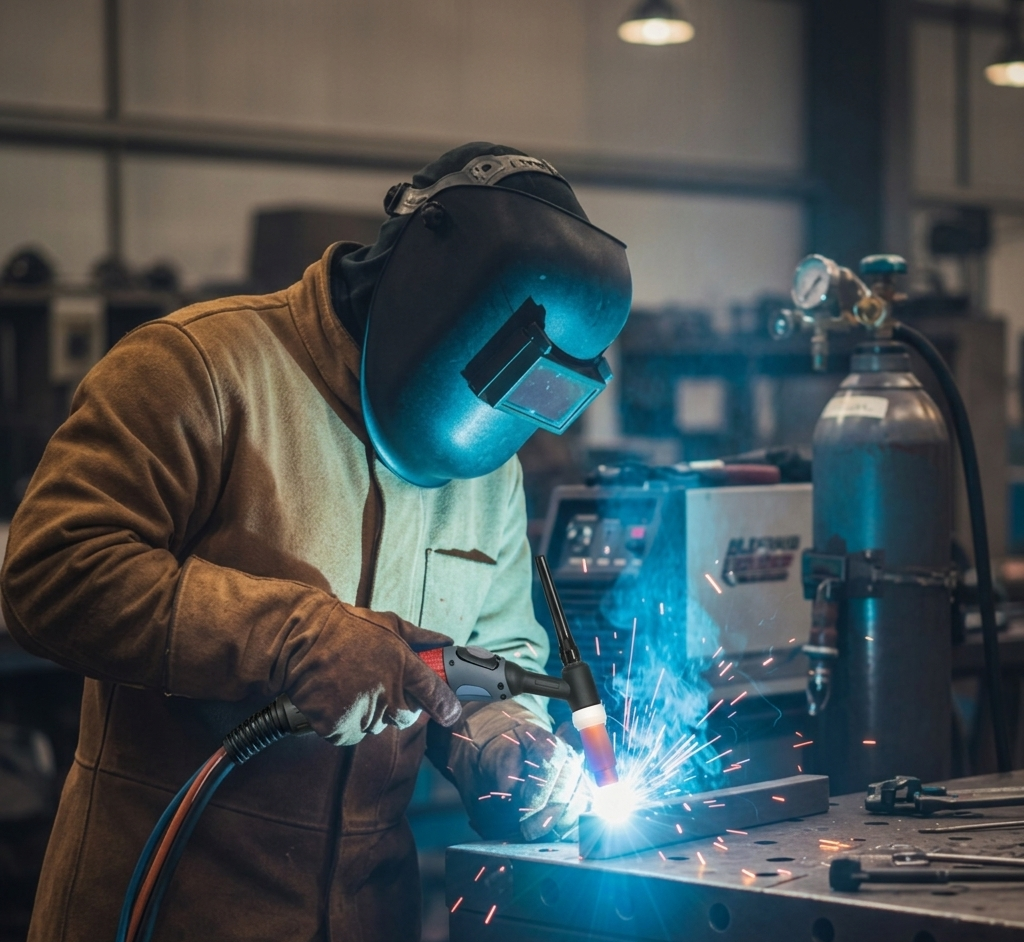
Understanding TIG welding is essential for professionals and enthusiasts seeking precision, quality, and long‑lasting joints. In this guide, we will break down what TIG welding is, why it matters, how it works, practical applications, key comparisons, and how to choose the right setup for your needs.
This resource is crafted with industry accuracy, helpful insights, and real‑world expertise.
Understanding TIG Welding
TIG welding, short for Tungsten Inert Gas welding, is a precision welding process that uses a non‑consumable tungsten electrode to produce a high‑quality arc. Unlike other methods, TIG welding creates clean, controlled welds by shielding the weld area with inert gas, typically argon or helium mix.
The process is widely used across industries where aesthetic weld appearance, structural integrity, and minimal spatter are priorities, such as aerospace, automotive, and stainless steel fabrication.
Why TIG Welding Matters
TIG welding delivers exceptional control over the heat input, resulting in welds that are strong and cosmetically superior. It is ideal for thin materials and critical joints where defect avoidance is paramount.
Many quality standards and specifications, including AWS D17.1 aerospace, ASME boiler code, and ISO 9606 welder qualification, favor TIG for its reliability and repeatability. This makes TIG welding a preferred choice for engineers and fabricators focused on compliance and performance.
How TIG Welding Works
The Core Components
TIG welding uses several essential elements:
- Tungsten electrode: creates the electric arc without burning away
- Shielding gas: protects the weld pool from contamination
- Filler metal: optional rod added manually for material build‑up
- Welding torch: holds the electrode and delivers gas and current
During welding, the torch generates a concentrated arc that melts the base metal. Welders guide a filler rod by hand or foot‑pedal control to feed metal into the joint, maintaining a stable puddle.
Control and Precision
The ability to precisely adjust amperage and gas flow allows welders to handle delicate metals such as aluminum, magnesium, and titanium. This level of control minimizes warpage and discoloration, crucial for thin sections and high‑spec work.
Key Practical Applications
TIG welding spans a wide range of industries due to its adaptability and precision.
Aerospace and Defense
In aerospace, TIG welding is essential for fabricating structural components from lightweight alloys like aluminum 2024, titanium, and Inconel superalloys. These materials demand high‑quality welds that maintain strength at elevated temperatures.
Automotive and Motorsports
From custom exhaust work to high‑performance frames, TIG welding provides crack‑free joints and superior heat control. Car builders choose TIG for its ability to produce welds with minimal cleanup.
Art, Sculpture, and Jewelry
Artists and fabricators appreciate TIG for clean lines when joining stainless steel, copper, and precious metals. The process allows aesthetic freedom and tight tolerances without excessive grinding.
Comparing TIG to Other Welding Methods
TIG vs MIG Welding
- TIG welding offers better precision and surface finish
- MIG welding delivers faster deposition and easier learning curve
MIG (Metal Inert Gas) is ideal for production environments where speed is key, while TIG excels where quality outweighs throughput.
TIG vs Stick Welding
- Stick welding tolerates rusty or dirty materials
- TIG welding demands cleaner surfaces but results in finer welds
Stick welding is often used in construction and field repairs, whereas TIG fits controlled fabrication shops.
Quick Comparison Table
| Feature | TIG Welding | MIG Welding | Stick Welding |
|---|---|---|---|
| Precision | Very high | Medium | Low |
| Speed | Slow | Fast | Medium |
| Ease of Learning | Difficult | Easy | Moderate |
| Surface Finish | Cleanest | Clean | Rough |
| Material Condition | Must be clean | Mostly clean | Can be dirty |
| Best Use | Precision work | Production | Field repair |
Choosing the Right TIG Welding Setup
Selecting equipment and accessories depends on your materials, thickness, and production requirements. Professionals often rely on reliable TIG welding machines to ensure stable arcs, consistent performance, and durability for heavy-duty projects.
Power Source Considerations
- AC TIG machines: best for aluminum and magnesium
- DC TIG machines: ideal for steel, stainless, and exotic alloys
Inverter units deliver improved arc stability and portability compared to older transformer models.
Torch and Electrode Types
Choose between air‑cooled and water‑cooled torches based on duty cycle and amperage needs. Water‑cooled systems handle heavy use and higher currents with less fatigue.
Use the correct tungsten type for your application:
- Thoriated for DC welds
- Ceriated / Lanthanated for stable starts and longer life
- Pure tungsten for AC welding on aluminum
Correct selection ensures strength, corrosion resistance, and consistent bead appearance. Top shops stock quality TIG consumables including filler rods and tungsten electrodes to maintain high standards across projects.
Filler Metals
Match filler rods with your base material for compatibility and performance. Common options include:
- ER70S‑2 for mild steel
- ER308L for stainless steel
- ER4043 for aluminum
Correct selection ensures strength, corrosion resistance, and consistent bead appearance.
Standards, Certifications, and Safety
Achieving quality TIG welds often requires adherence to industry standards and welder qualifications. Common certifications include:
- Certified Welder (CW) under AWS
- ASME Section IX qualification for pressure vessels
- ISO 9606 for international welder certification
Safety is critical in TIG welding. Always wear appropriate PPE like auto‑darkening helmets, leather gloves, and flame‑resistant clothing to protect against UV radiation, heat, and spatter.
Maintenance and Support
Proper maintenance extends machine life and improves weld quality. Key areas include:
- Checking gas flow and hose integrity
- Cleaning and sharpening tungsten electrodes
- Calibrating foot pedals and power settings
Partnering with reputable suppliers such as Lincoln Electric, Miller Electric, and ESAB ensures access to reliable equipment, warranty support, and technical assistance when needed. When buying, consider aftermarket parts, warranty terms, and service availability.
Why TIG Welding Is Worth the Investment
Though TIG welding requires skill and practice, the payoff is high‑quality, durable welds with excellent appearance and structural integrity. For projects where precision cannot be compromised, TIG remains the go‑to process.
If you are evaluating welding processes for your next project, consider requesting a quote or contacting our experts to match the right equipment and consumables to your needs. For technical assistance in setup or certification guidance, our team is ready to help.
FAQ
What does TIG welding stand for?
TIG welding stands for Tungsten Inert Gas welding, a precision welding process that uses a non‑consumable tungsten electrode.
Can TIG weld aluminum?
Absolutely, TIG welding is ideal for aluminum when using an AC power source and appropriate filler rods like ER4043.
Do I need certification to TIG weld professionally?
Many industries require certifications such as AWS CW or ASME Section IX, especially for commercial and safety‑critical work.
What gases are used in TIG welding?
Common shielding gases include argon and argon‑helium mixtures that protect the weld pool from contamination.
Conclusion
TIG welding remains one of the most precise and versatile welding processes, delivering clean, strong, and aesthetically superior welds across industries such as aerospace, automotive, and art fabrication.
By understanding the process, selecting the right equipment, materials, and following industry standards, professionals can achieve high-quality, defect-free welds that meet both performance and safety requirements.
For reliable TIG welding machines, genuine consumables, and expert technical support in the UAE, NGEN Global is a trusted partner for high-quality equipment and professional guidance tailored to your project needs.
Contact our welding specialists for personalized advice and fast, accurate quotations.
Related Guides and Resources
- Types of Welding Machines: Choose the Right One: Optimize your TIG and MIG projects with the right machine selection.
- The Guide to Selecting the Right Stainless Steel Welding Rods: Ensure strong, reliable welds for every stainless steel application.
- Benefits of Welding Screen and Curtains to Keep Welders Safe: Protect your team from sparks and UV exposure.
- What Is ARC/MMA Welding? Process, Uses & Advantages: Learn the basics and applications of ARC/MMA welding.
- What is MIG Welding and How Does It Work? Beginner’s Guide: Understand MIG welding and how it compares to TIG.
