

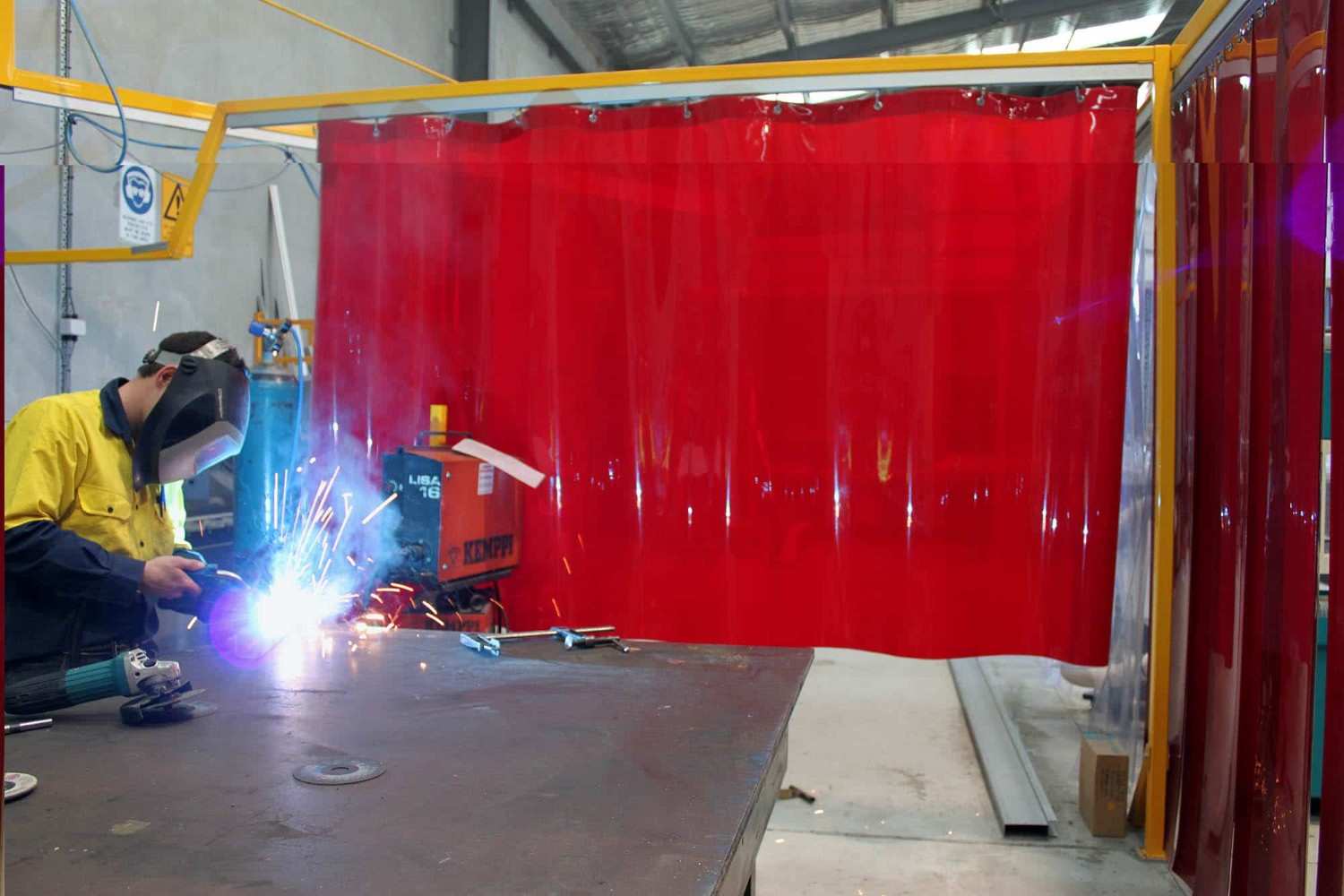
In busy fabrication shops, shipyards, and construction sites, welding rarely happens in isolation. Sparks, arc flash, heat, and fumes can easily affect nearby workers if proper barriers are not in place. This is where welding screens and curtains become essential safety equipment, not just optional accessories.
From heavy fabrication to maintenance bays, certified barriers protect welders, technicians, and visitors while supporting productivity and compliance with safety regulations. When selected and installed correctly, they become a key part of a professional safety management system.
What Are Welding Screens and Curtains
Welding curtains are flexible, flame resistant vinyl barriers designed to block welding arc light, sparks, and hot spatter. They are commonly mounted on frames or ceiling tracks to form temporary or permanent welding enclosures.
Welding safety screens are rigid or semi rigid panels fitted into metal frames. These are often mobile and used to divide workstations on open shop floors where layouts frequently change.
Both products are part of compliant welding safety equipment used to protect welders and surrounding personnel from exposure to hazardous welding byproducts.
How Welding Screens and Curtains Protect Workers
Protection from Arc Flash and UV Radiation
Welding arcs emit intense ultraviolet and infrared radiation that can damage eyes and skin within seconds. Even brief indirect exposure may lead to arc eye, burns, or long-term vision issues.
Certified welding safety screens filter harmful wavelengths while still allowing supervisors to monitor work safely. This protects not only welders but also technicians, inspectors, and nearby personnel who may not be wearing welding PPE.
Key safety advantages include:
- Reduced risk of arc flash injuries
- Protection for non welding staff in shared workspaces
- Safer supervision and quality inspections
Containment of Sparks and Hot Spatter
Molten metal particles can travel several meters from the welding arc and remain hot enough to ignite nearby materials. Without barriers, sparks can damage equipment or start fires.
High quality welding curtains for safety are flame resistant and self extinguishing. They contain spatter within the welding zone, reducing the chance of secondary fires.
Benefits:
- Prevents fire hazards in workshops
- Minimizes cleanup after welding tasks
- Protects sensitive surfaces and nearby equipment
Supporting Fume Control and Air Quality
Welding produces hazardous fumes containing metal oxides and gases. While curtains do not filter fumes, they help control airflow within the workspace.
By reducing turbulence, welding safety screens direct contaminated air toward extraction hoods and local exhaust ventilation systems, improving overall air quality.
Facilities that use curtain enclosures often report more consistent air quality readings during industrial hygiene testing.
Localized Heat Containment
Arc welding can quickly raise ambient temperatures, especially in confined or poorly ventilated areas. Excess heat contributes to worker fatigue and heat stress.
Welding curtains help contain heat within the welding enclosure rather than letting it spread across the shop floor. This improves comfort for non welding staff and helps HVAC systems maintain stable temperature control across production areas.
In summer months, this localized containment can significantly reduce heat stress risks in large workshops.
Creating Flexible Welding Zones
Permanent welding booths are not always practical in dynamic production environments handling varied job sizes.Portable welding screens allow supervisors to create safe welding zones wherever needed.
Mobile systems can be repositioned quickly without structural changes, improving workflow flexibility.
Improving Focus and Reducing Distractions
Bright arc flashes and nearby movement can distract welders during precision tasks, affecting weld quality. Curtains visually separate the welding area, reducing interruptions.
Welders also benefit from reduced foot traffic near their work area, allowing them to focus on precision tasks that require steady hand control and clear sight lines. Better focus leads to improved weld quality and fewer rework cycles.
Noise Reduction Benefits in Open Workshops
While not designed as soundproof barriers, welding curtains provide partial acoustic dampening in open industrial spaces. This helps reduce background noise levels for adjacent workstations and limits echo in high ceiling workshops.
Lower noise exposure contributes to reduced fatigue and better communication between teams working in shared production environments.
Compliance with Safety Regulations and Standards
Many occupational safety authorities require physical barriers to protect non welders from arc flash exposure in shared spaces. Using certified welding protective barriers helps companies meet workplace safety regulations and avoid costly citations during inspections.
More importantly, visible safety measures demonstrate a strong safety culture that builds trust among employees and visiting contractors.
In industries such as oil and gas, marine fabrication, and infrastructure construction, barrier systems are often part of mandatory site safety checklists.
Types of Welding Techniques and How Welding Screens Protect Workers
1. ARC/MMA Welding:
A manual welding technique that uses a consumable electrode to create an electric arc to melt the workpiece and filler material. Welding screens protect workers from the intense radiation and sparks generated during the process.
In workshops using stick welding, proper shielding is critical due to high arc intensity and heavy spatter. Facilities operating with ARC/MMA welding machines should ensure full enclosure using welding screens to protect nearby workers from radiation and sparks.
2. MIG Welding:
A semi-automatic or automatic welding process that uses a continuous solid wire electrode fed through a welding gun, combined with shielding gas to protect the weld from contamination.
High production workshops commonly rely on continuous wire feeding systems, making spark containment essential. When working with MIG welding machines, welding curtains help control spatter and maintain safer work zones around fast-paced fabrication lines.
3. TIG Welding:
A precise welding technique that uses a non-consumable tungsten electrode to produce the weld, ideal for thin materials and high-quality welds.
Precision welding requires stable lighting conditions and minimal distractions. In facilities using TIG welding machines, welding screens support operator focus while shielding nearby staff from reflected arc radiation.
4. Laser Welding:
A high-precision welding method that uses a laser beam to melt and join materials, providing deep penetration with minimal heat distortion. When operating laser welding machines, protective curtains help manage localized heat and reduce accidental exposure for surrounding personnel.
5. Plasma Welding:
Similar to TIG welding but uses a constricted plasma arc to improve heat concentration, making it suitable for thin materials and intricate welds. In workshops operating with plasma welding machines, welding screens help contain spatter and minimize the risk of fire hazards.
Choosing the Right Welding Screen or Curtain
Material Quality and Certifications
Always select products that meet recognized flame resistance and light filtering standards. Low quality materials may discolor quickly or lose protective properties under heat. Look for screens that provide proper optical density ratings for arc shielding while maintaining visibility for supervision and safety checks.
Along with certified screens and curtains, using compatible safety and welding accessories improves overall protection and workflow efficiency. Sourcing equipment from the best welding accessories suppliers in UAE ensures compatibility with industrial safety standards.
Fixed vs Mobile Configurations
Fixed track mounted curtains work well for permanent welding booths. Mobile screens are better suited for changing layouts or temporary welding tasks. Facilities with mixed operations often use both to balance safety and operational flexibility.
Coverage Size and Layout Planning
Barriers should extend far enough to block direct and reflected arc light from all angles. Gaps between panels can compromise protection. Proper layout planning ensures that bystanders are not exposed when moving between work areas.
Practical Example from Fabrication Workshops
In heavy equipment repair shops, welding often occurs near hydraulic servicing and electrical diagnostics. Installing curtain enclosures around welding bays prevents arc flash from affecting technicians working on sensitive electronics.
Another example is shipyard fabrication, where mobile screens allow teams to isolate welding during hull assembly while other crews continue fitting and inspection work safely nearby.
These real world setups show how barriers support both safety and productivity without slowing operations.
When to Replace Welding Screens and Curtains
Even high quality barriers need regular inspection. Replace curtains if you notice:
- Discoloration that reduces visibility
- Cracks or brittleness in the material
- Burn holes or melting near weld zones
Routine inspections should be part of safety audits to ensure continued protection.
AI Overview
This blog explains how welding screens and curtains protect welders, prevent sparks, arc flash, and fumes, and ensure safety compliance in industrial workplaces. It also highlights how these barriers improve productivity and maintain safer fabrication environments.
FAQs
What is the purpose of a welding curtain or screen?
Welding curtains and screens protect workers from arc flash, sparks, and UV radiation, ensuring safety in welding zones. They also help contain heat, spatter, and fumes, maintaining a safer workspace.
What are the benefits of safe welding practices?
Safe welding practices prevent injuries, equipment damage, and fire hazards in workshops. They also improve productivity, compliance, and overall workplace safety culture.
What is the purpose of a welding blanket or curtain?
Welding blankets and curtains shield nearby surfaces and personnel from sparks, molten metal, and heat. They provide temporary protection during welding, grinding, or cutting tasks.
Why is it necessary to use protective screens when arc welding?
Protective screens block harmful radiation, flying sparks, and hot spatter, keeping non-welders safe. They reduce distractions for welders and support adherence to safety regulations.
Conclusion
Welding screens and curtains are essential for maintaining a safe and productive industrial workspace. They protect welders and nearby personnel from arc flash, sparks, fumes, and heat, while supporting compliance with occupational safety standards.
By selecting the right certified barriers and maintaining them properly, facilities can reduce accidents, improve workflow efficiency, and ensure a safer environment for all staff.
Looking for high-quality welding screens, curtains, and expert guidance for your workshop safety needs?
NGEN Global provides premium industrial welding safety solutions, technical support, and reliable recommendations across UAE, Saudi Arabia, Oman, and Kenya.
Contact our welding advisors today for personalized advice and fast quotations.
