

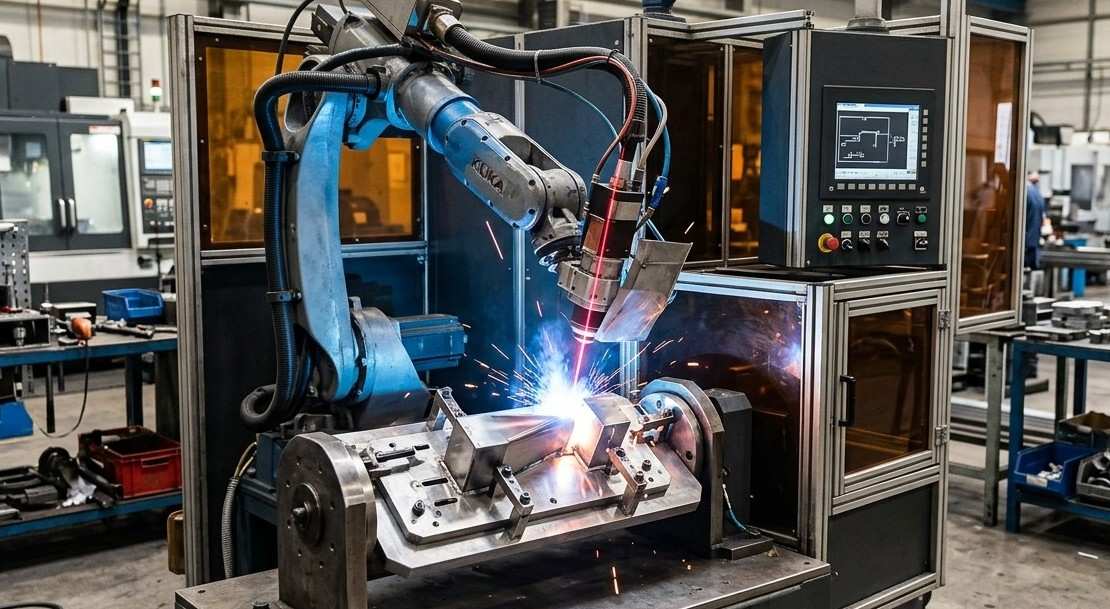
A laser welding machine has become an essential investment for manufacturers seeking faster production, higher precision, and lower operating costs. Industries such as automotive, aerospace, electronics, medical device manufacturing, jewelry, metal fabrication, and industrial equipment increasingly rely on laser welding because it produces strong, clean welds with minimal heat distortion.
Unlike traditional welding methods such as TIG or MIG welding, laser welding uses a highly focused laser beam to create deep, accurate welds while reducing material waste and post-processing. However, choosing the right machine involves much more than comparing prices.
Buyers must evaluate power output, material compatibility, production requirements, automation capabilities, maintenance costs, and long-term return on investment (ROI). This buying guide explains everything you need to know before purchasing a laser welding machine, including costs, ROI, and the most important selection factors.
What Is a Laser Welding Machine?
A laser welding machine joins metal components using a concentrated laser beam that melts the material precisely at the joint. Once the molten metal cools, it forms a strong and durable weld.
Modern systems commonly use fiber laser technology, which offers higher efficiency, lower maintenance, and longer service life than older laser technologies.
Laser welding is widely used for:
- Stainless steel fabrication
- Carbon steel welding
- Aluminum welding
- Copper welding
- Titanium components
- Sheet metal manufacturing
- Automotive parts
- Battery manufacturing
- Medical equipment
- Electronics production
Because the laser creates a narrow heat-affected zone, manufacturers experience less warping and better product quality.
Types of Laser Welding Machines
Choosing the correct machine starts with understanding the available options.
Handheld Laser Welding Machines
Handheld systems are popular among fabrication workshops and repair businesses. They offer flexibility, easy operation, and excellent weld quality for small and medium-sized projects.
Best for:
- Metal fabrication
- Repair work
- Stainless steel products
- Custom manufacturing
Automated Laser Welding Systems
Automated systems integrate with robotic arms and production lines for high-volume manufacturing.
Suitable for:
- Automotive manufacturing
- Aerospace production
- Electronics assembly
- Mass production facilities
Desktop Laser Welding Machines
Compact machines are designed for small precision applications such as jewelry, dental equipment, and delicate electronic components.
How Much Does a Laser Welding Machine Cost?
The purchase price depends on several technical specifications and production requirements.
Factors affecting machine cost include:
- Laser power
- Fiber laser source quality
- Cooling system
- Automation features
- Brand reputation
- Welding speed
- Software capabilities
- Safety features
- Warranty coverage
- Local service availability
A basic handheld machine generally costs significantly less than a fully automated industrial laser welding system. However, focusing only on the purchase price can be misleading because the total cost of ownership includes maintenance, energy consumption, consumables, operator training, and productivity improvements.
Available Laser Welding Machine Models
Depending on your welding requirements and production capacity, you can choose from different laser welding machine models:
- NGEN-LW-1500W – Suitable for light to medium-duty welding applications, including stainless steel fabrication and sheet metal work.
- NGEN-LW-2000W – Designed for higher productivity, offering improved welding speed and compatibility with a wider range of metal thicknesses.
- NGEN-LW-3000W – Ideal for demanding industrial applications that require high power, deep penetration, and continuous operation.
Choosing the right model depends on the material type, thickness, production volume, and long-term manufacturing goals.
Factors to Consider Before Buying
Laser Power
Laser power determines the machine’s welding capability.
Lower-power machines are suitable for thin sheet metal, while higher-power models handle thicker materials and demanding industrial applications.
Always match the machine’s power with your production requirements instead of buying the highest-powered model unnecessarily.
Material Compatibility
Different machines perform differently depending on the material.
Verify compatibility with:
- Stainless steel
- Mild steel
- Aluminum
- Copper
- Brass
- Titanium
- Galvanized steel
Some reflective metals require advanced laser technology for optimal performance.
Production Volume
A workshop producing small batches has different requirements than a factory operating multiple shifts.
Evaluate:
- Daily production targets
- Welding speed
- Duty cycle
- Continuous operating capability
Choosing the correct production capacity prevents future bottlenecks.
Ease of Operation
Modern laser welding machines feature intuitive touch-screen controls, preset welding parameters, and user-friendly software.
Simple controls reduce training time and improve productivity.
Maintenance Requirements
Fiber laser systems generally require less maintenance than conventional welding equipment.
Before purchasing, ask about:
- Service intervals
- Spare part availability
- Technical support
- Warranty terms
- Preventive maintenance requirements
Reliable after-sales support minimizes downtime.
Understanding Return on Investment (ROI)
The real value of a laser welding machine comes from long-term savings rather than the initial purchase cost.
Higher Productivity
- Laser welding operates much faster than many traditional welding methods.
- Faster cycle times increase production capacity without expanding the workforce.
Lower Labor Costs
- Many modern systems require less manual intervention.
- Reduced operator workload allows businesses to allocate skilled workers to higher-value tasks.
Improved Product Quality
Consistent weld quality reduces:
- Rework
- Scrap rates
- Material waste
- Customer complaints
Higher quality directly improves profitability.
Lower Operating Costs
Fiber laser technology consumes less electricity and has fewer wearable parts than conventional welding equipment. Lower maintenance expenses contribute significantly to long-term savings.
Faster Project Completion
Shorter production times help manufacturers deliver products faster, improving customer satisfaction and increasing business opportunities.
Common Mistakes to Avoid
Many buyers make purchasing decisions based solely on price. Instead, avoid these common mistakes:
- Ignoring future production growth
- Choosing insufficient laser power
- Overlooking after-sales support
- Skipping operator training
- Failing to compare maintenance costs
- Buying incompatible machines for intended materials
- Ignoring workplace safety requirements
A well-planned purchase reduces operational risks and maximizes equipment lifespan.
Questions to Ask Your Supplier
Before placing an order, ask important technical questions.
For example:
- What materials can the machine weld?
- What is the recommended material thickness?
- What warranty is included?
- Is operator training available?
- How quickly are spare parts supplied?
- What maintenance schedule is recommended?
- Is software support included?
- Can the machine be upgraded in the future?
These questions help ensure the equipment meets your long-term production goals.
Is a Laser Welding Machine Worth the Investment?
For businesses involved in precision manufacturing, sheet metal fabrication, automotive components, industrial equipment, or custom metal products, investing in a laser welding machine often delivers measurable long-term value.
Although the initial investment may appear higher than conventional welding equipment, the combination of faster production, consistent weld quality, lower maintenance, reduced material waste, and improved operational efficiency often results in a strong return on investment over time.
The key is selecting a machine that aligns with your production volume, material requirements, automation needs, and future business growth rather than focusing solely on the purchase price.
Conclusion
Choosing the right laser welding machine supplier requires balancing cost, performance, reliability, and long-term business objectives. Understanding laser power, material compatibility, maintenance requirements, production capacity, and ROI enables buyers to make informed purchasing decisions that support sustainable growth.
Whether you operate a small fabrication workshop or a large manufacturing facility, investing in the right laser welding solution can improve productivity, reduce operating costs, and enhance product quality. By evaluating both your current requirements and future expansion plans, you can select equipment that delivers lasting value and a competitive advantage.
Ready to invest in the best laser welding machine in the UAE? Contact NGEN today to speak with our experts, request a quote, or find the ideal solution for your welding needs.
Related Guides
- Types of Welding Machines: Choose the Right One: Optimize your TIG and MIG projects with the right machine selection.
- What is Plasma Arc Welding and What is it Used For: Understanding plasma arc welding, its applications, and industrial benefits.
- What Is ARC/MMA Welding? Process, Uses & Advantages: Learn the basics and applications of ARC/MMA welding.
- What is MIG Welding and How Does It Work? Beginner’s Guide: Understand MIG welding and how it compares to TIG.
- AC vs DC TIG Welding: Which Is Best for UAE Metal Fabrication: Choose the right TIG current for cleaner welds, stronger joints, and optimal metal fabrication performance.
