

A laser cleaning machine uses a focused beam of light to vaporize or peel away rust, paint, oil, and contaminants from a surface without using chemicals or physical abrasives. The pulsed beam leaves the base material intact. Beginners should choose between pulsed and continuous-wave models, match power to the job, and follow IEC 60825-1 safety requirements.
What Is Fiber Laser Cutting?
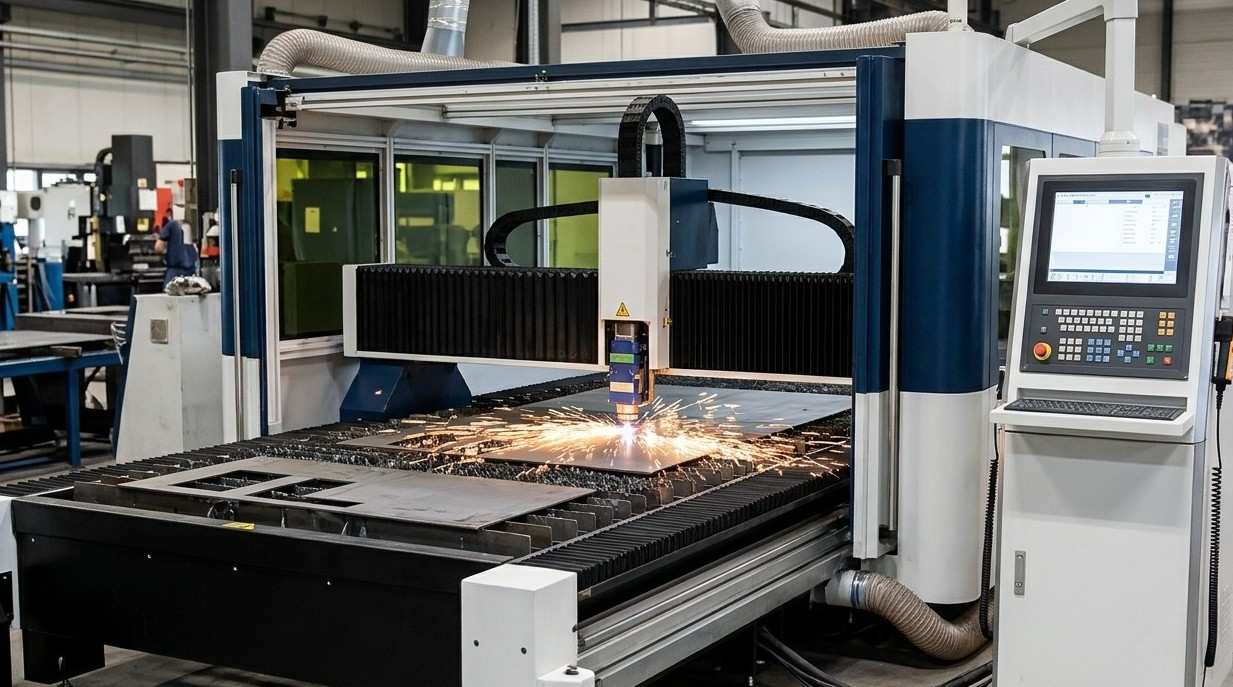
Fiber laser cutting is a CNC process that focuses a beam generated in a doped optical fiber onto metal, melting or vaporizing it along a programmed path. Its 1.06 micron wavelength is absorbed efficiently by metals, which makes it the standard for sheet, plate, and tube fabrication.
Five core parts define the system: the laser source, delivery fiber, cutting head with autofocus, motion system, and CNC controller. The chiller and assist gas supply complete the setup. Each component affects cut quality, uptime, and operating cost.
How to Use a Fiber Laser Cutting Machine
To use a fiber laser cutting machine, load a nested CAD file into the CNC, select material parameters, fit the correct nozzle, and run a test cut. Then start production while monitoring gas pressure and focus. Always operate with the enclosure and interlocks active.
Follow this sequence:
- Prepare the file: Nest parts and apply kerf compensation.
- Load the sheet: Place it flat and free of oil or debris.
- Set parameters: Match power, speed, gas, and focus to the material and thickness.
- Check consumables: Inspect the nozzle and protective lens.
- Run a test cut: Verify edge quality and dimensions before production.
Gas selection shapes the result:
- Oxygen adds exothermic heat for thick carbon steel but leaves an oxide edge.
- Nitrogen produces clean, oxide-free edges on stainless steel and aluminum.
- Compressed air lowers cost on thin sheet where edge finish matters less.
What Materials and Thicknesses Can It Cut?
A fiber laser cuts carbon steel, stainless steel, aluminum, brass, copper, and titanium. A 6 kW system handles about 25 mm mild steel, while 12 kW and above reaches 40 mm and beyond with acceptable edge quality.
Reflective metals need attention. Copper and brass can send back-reflected light into the fiber, so confirm the machine includes back-reflection protection. Wood, acrylic, and most plastics belong on a CO2 system.
How Much Power Do You Need?
Choose power based on your thickest frequent material, not your thickest occasional job. A 3 kW source suits shops cutting mostly under 12 mm. Mid-range 6 kW to 12 kW covers general fabrication, and a 20 kW fiber laser cutting machine serves heavy plate and high-volume production.
Extra power raises capital cost, chiller load, and electricity draw. Once gas flow and motion dynamics become the limit, it stops improving throughput.
Fiber Laser vs. CO2 vs. Plasma: Which Fits?
Fiber lasers win on speed, efficiency, and maintenance for metals under 25 mm. CO2 lasers suit mixed-material shops that also cut non-metals. Plasma costs less upfront and handles very thick plate, but it offers lower precision and wider kerfs.
| Factor | Fiber Laser | CO2 Laser | Plasma |
| Best material | Thin to medium metal | Metals and non-metals | Thick conductive plate |
| Edge quality | Excellent | Very good | Moderate |
| Running cost | Low | Medium | Low |
| Maintenance | Minimal | Mirror alignment, gas | Frequent consumables |
What Is the Best Fiber Laser Machine?
The best fiber laser machine is the one that matches your thickest frequent material, production volume, and service access, not the highest wattage. For most general fabrication shops, a 6 kW to 12 kW system that is ready for automation offers the strongest balance of capability and cost.
Score each vendor from 1 to 5 on this five-point fit test:
- Process fit: Does rated power match your thickest frequent material?
- Total cost of ownership: Include consumables, gas, power, chiller, and downtime.
- Automation readiness: Check for loading towers, sorting, and ERP connectivity.
- Service support: Confirm local engineers, spare parts stock, and remote diagnostics.
- Compliance: Verify alignment with IEC 60825-1 and ISO 11553.
Treat any vendor scoring below 3 on service support as a risk, regardless of price.
What Are the Safety and Maintenance Requirements?
Fiber laser systems are Class 4 hazards, so they require enclosed cutting areas, interlocked doors, certified viewing windows, and fume extraction. Follow IEC 60825-1 for laser product classification and safety requirements and ANSI Z136.1 for safe use. Trained operators and documented procedures are mandatory.
A basic routine protects uptime:
- Inspect nozzles and protective lenses every shift.
- Check chiller coolant quality weekly.
- Clean filters and verify gas purity monthly.
- Calibrate the cutting head quarterly.
Contaminated protective windows are the most common cause of sudden cut degradation..
Final Takeaways for Choosing a Fiber Laser Cutting Machine
The right fiber laser cutting machine matches your real material profile, not the largest number on the brochure. Score vendors on process fit, ownership cost, automation, service, and compliance. Plan gas supply, ventilation, and operator training before delivery day.
For manufacturers planning a new installation or an upgrade, Ngen Global can help assess requirements and define a practical specification.
Looking for a fiber laser supplier you can rely on?
Share your cutting application, base material, and sheet thickness, and our team will recommend the right machines, confirm stock and support, and send a clear written quotation. You get honest advice from people who work with this equipment every day.
Frequently Asked Questions
How long does a fiber laser cutting machine last?
A fiber laser source typically lasts 80,000 to 100,000 operating hours. The frame and motion system often run 15 years or more with proper care. Nozzles and lenses need regular replacement.
Is a fiber laser better than CO2 for metal?
Yes, for most sheet metal work. Fiber lasers cut faster on thin to medium metals, use less electricity, and need less maintenance. CO2 remains better only when you also process non-metals such as wood or acrylic.
How much does a fiber laser cutting machine cost?
Prices range from around 30,000 USD for entry-level 1.5 kW units to several hundred thousand USD for high-power, automated systems. Budget for gas, power, chiller, installation, and training as well.
Don’t Miss to Read More Welding Machine Blogs
- What Is ARC/MMA Welding? Process, Uses & Advantages Learn the basics and applications of ARC/MMA welding.
- I Tried ARC/MMA Welding for Heavy Steel Real test results from heavy steel welding work.
- Types of Welding Machines Choose the Right One A quick breakdown to help you pick the right machine for the job.
- Top 10 Industrial Applications of Arc Welding See where arc welding machines get used across major industries.
- Best Welding Equipment Suppliers Across the UAE A roundup of trusted suppliers for sourcing welding equipment.
