

TL;DR
MIG welders join metal by feeding a continuous wire electrode through a gun while shielding gas protects the weld pool from air. The right gas, wire size and amperage depend on the metal and its thickness. A basic setup needs a welder, gas cylinder, correct wire and proper safety gear. Voltage and wire feed speed are the two settings that control weld quality. It is one of the easiest processes for a beginner to pick up and still strong enough for professional fabrication work.
MIG welding has become the go to process for beginners, hobbyists and professional fabricators alike, and it is easy to see why. It is fast, forgiving and produces clean strong joints once you understand a handful of settings.
This complete guide to MIG welders: everything you need to know walks through how the process works, the equipment you need, the gas and wire choices that matter and the technique that turns a shaky first attempt into a solid weld.
What Is MIG Welding And How Does It Work
MIG welding, also called Gas Metal Arc Welding, uses electricity to melt a continuously fed wire electrode and join it with the base metal. As the wire melts it deposits filler material into the joint while a shielding gas flows around the arc to keep out oxygen and nitrogen from the air.
This is what makes MIG different from stick welding, where the electrode has to be replaced constantly. With a MIG welder the MIG welding machines feed wire automatically from a spool, so you can weld longer seams without stopping. The trigger on the gun controls three things at once, the wire feed, the current and the gas flow, which is part of why the process feels so approachable for new welders.
Essential Equipment for MIG Welding
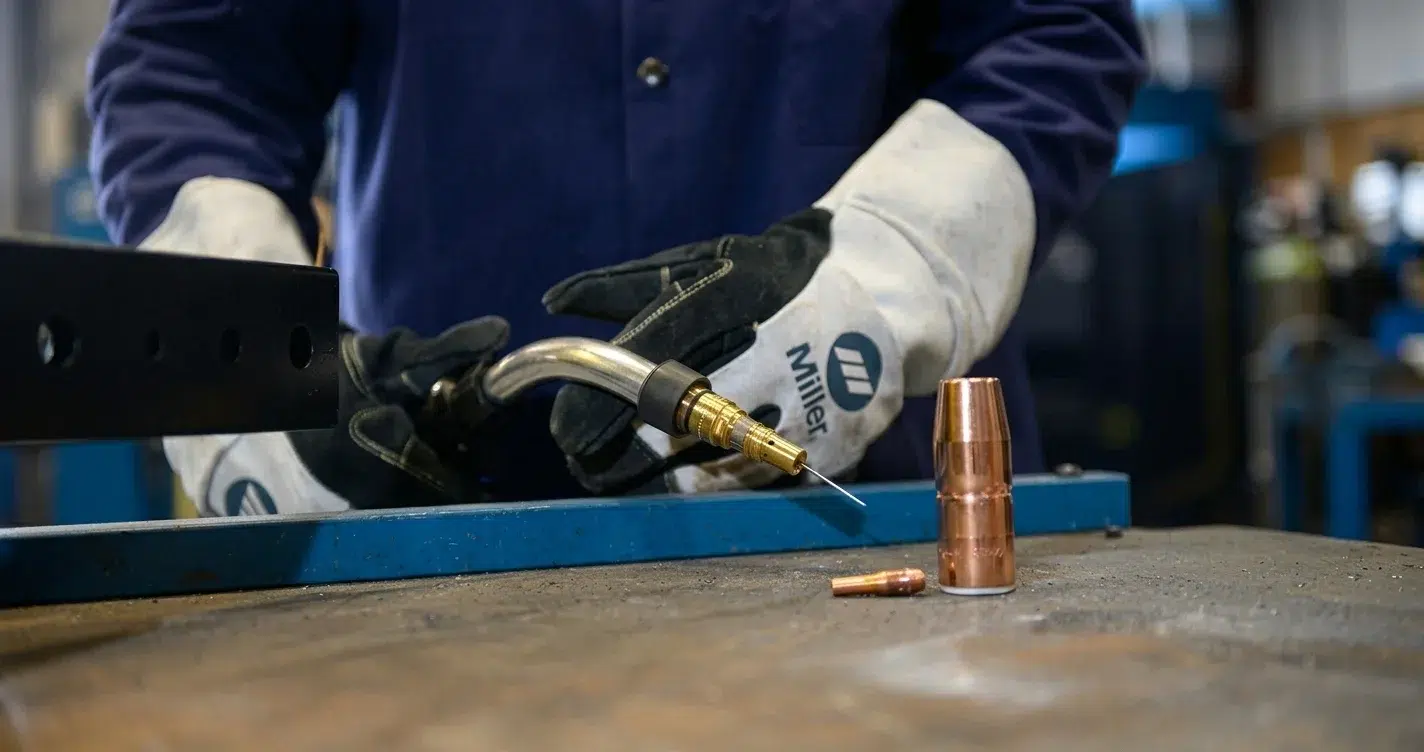
Before you strike your first arc, it helps to have the right supplies on hand rather than discovering gaps halfway through a project. If you are sourcing equipment locally, MIG welding suppliers in UAE can help you select the right machine, wire, shielding gas and supporting accessories for your application. A typical MIG welding setup includes the following.
- A MIG welder with adjustable voltage and wire feed speed
- A shielding gas cylinder matched to the metal you are welding
- The correct wire diameter for your material thickness
- An auto darkening welding helmet to protect your eyes and face
- A wire brush to clean the metal before and after welding
- C clamps or magnetic clamps to hold your workpiece steady
- An angle grinder for surface prep and cleanup
Working through this checklist is a big part of following this Complete Guide to MIG Welders: Everything You Need to Know, since missing even one item, like the wrong wire diameter or wrong MIG nozzle size, can lead to a frustrating first session.
Safety gear matters just as much as the machine itself. Long sleeves, leather gloves, closed shoes and a well ventilated space are non negotiable, since MIG welding produces sparks, spatter and bright ultraviolet light.
What Welding Angle And Travel Technique Should You Use
Technique has as much impact on weld quality as the settings on the machine. Most welders use a push technique for gas shielded solid wire, meaning the gun leads the weld pool rather than dragging behind it.
A travel angle of 10 to 15 degrees works well for most joints, and the gun should be held close enough that the wire stickout stays around 6 to 10 millimetres. Too much stickout weakens the arc and lets shielding gas escape before it reaches the pool, which leads to porosity.
Work angle changes depending on the joint. A butt joint is usually welded at 90 degrees to the workpiece, while a fillet joint typically calls for a 45 degree angle. Moving too quickly reduces penetration, and moving too slowly builds an oversized bead that needs grinding later.
Where Is MIG Welding Used
MIG welding shows up across almost every industry that works with metal. It is common in automotive repair, home fabrication, structural steel work, pressure vessel manufacturing and general maintenance welding.
Because the process is semi automatic and easy to automate further, it is also the standard choice for robotic welding lines in manufacturing. For jobs that call for a different process, such as thin precision work or non ferrous alloys, a fabricator might reach for TIG welding machines instead, though many workshops keep both types of equipment on hand.
What Are The Benefits And Limitations Of MIG Welding
Like any welding process, MIG has clear strengths and a few limitations worth knowing before you commit to a project.
Benefits
- Fast travel speed and high productivity
- Minimal spatter compared to older processes
- Works on steel, stainless steel and aluminium
- Easy to learn compared to TIG or stick welding
- Can be automated for repetitive industrial work
Limitations
- Shielding gas makes it less suited to outdoor or windy conditions
- Not ideal for very thick sections without multiple passes
- Requires clean metal free of rust, oil and paint
- Equipment and consumables need welding safety equipment and regular maintenance to perform well
Conclusion
Getting comfortable with MIG welding comes down to understanding a few fundamentals, the right gas, the correct wire and settings, and a steady hand with your travel angle. Once those pieces come together, MIG welding rewards you with clean strong joints and a process that scales from a weekend repair to full production work.
As a trusted welding equipment supplier, NGEN Global helps fabricators and contractors access reliable machines and consumables built for demanding work.
Frequently Asked Questions
What does MIG stand for?
MIG stands for Metal Inert Gas welding, and it is also known as Gas Metal Arc Welding since the process protects the weld pool with a shielding gas while feeding a continuous wire electrode.
Can a beginner learn MIG welding on their own?
Yes, MIG welding is considered one of the easiest processes to self-teach because the wire feeds automatically and the settings charts on most machines guide you toward the right amperage for your material.
What gas is best for MIG welding mild steel?
A mix of 75 percent Argon and 25 percent CO2 is the most common choice for mild steel, since it gives a stable arc, low spatter and good penetration for general fabrication work.
Don’t Miss to Read More Welding Machine Blogs
- What Is ARC/MMA Welding? Process, Uses & Advantages:Learn the basics and applications of ARC/MMA welding.
- I Tried ARC/MMA Welding for Heavy Steel: Real test results from heavy steel welding work.
- Types of Welding Machines Choose the Right One: A quick breakdown to help you pick the right machine for the job.
- Top 10 Industrial Applications of Arc Welding: See where arc welding machines get used across major industries.
- Best Welding Equipment Suppliers Across the UAE: A roundup of trusted suppliers for sourcing welding equipment.
