

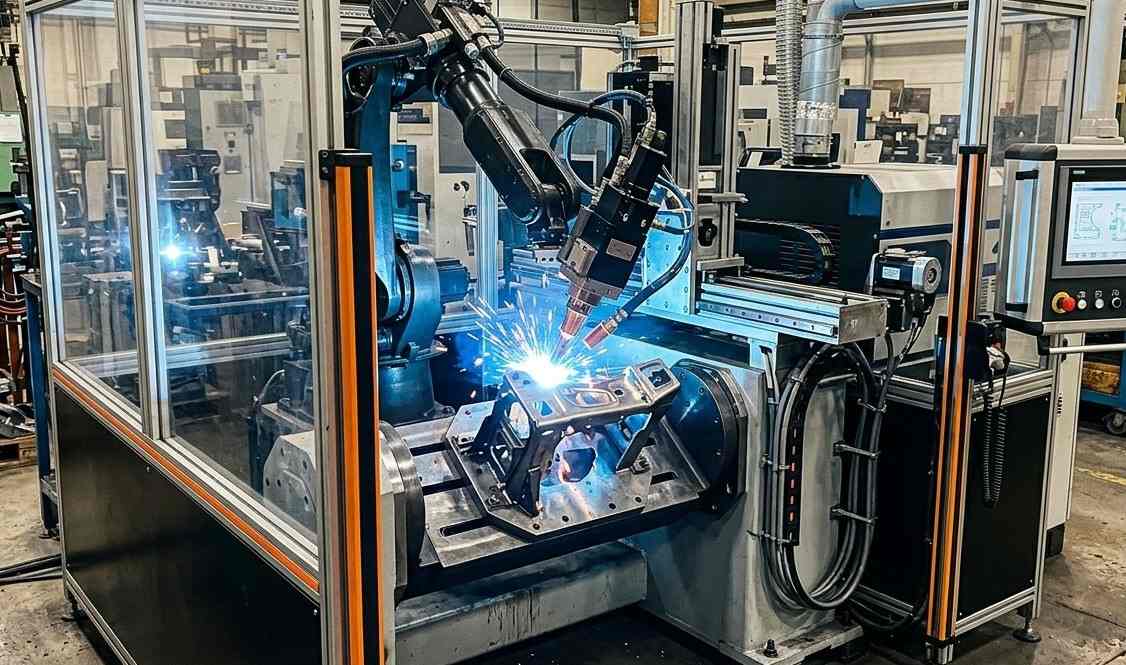
A laser cleaning machine uses a focused beam of light to vaporize or peel away rust, paint, oil, and contaminants from a surface without using chemicals or physical abrasives. The pulsed beam leaves the base material intact. Beginners should choose between pulsed and continuous-wave models, match power to the job, and follow IEC 60825-1 safety requirements.
Surface preparation is a bottleneck in many shops. Sandblasting creates dust and media waste, and chemical stripping adds disposal and compliance costs. A laser cleaning machine offers a cleaner alternative, but beginners face unfamiliar specifications like pulse energy, frequency, and spot size.
What Is a Laser Cleaning Machine?
A laser cleaning machine is an industrial tool that removes surface contaminants with focused laser pulses. It typically consists of a fiber laser source, a scanning head, a cooling system, and a controller. Operators move a handheld or robotic head across the surface, and the contaminant absorbs the energy and vaporizes.
Common targets include rust, paint, mill scale, oil films, weld oxide, and mold residue.
Why Do Shops Switch to Laser Cleaning?
Shops switch because laser cleaning removes contaminants without blasting media, solvents, or surface wear. Two benefits stand out:
- Non-contact: The head never touches the part, so molds and precision components see no mechanical wear.
- Eco-friendly: There is no solvent to manage and no blasting media to dispose of. Extraction captures the vaporized residue.
How Does Laser Cleaning Work?
Laser cleaning works through selective absorption. The focused beam of light heats the contaminant rapidly, so it vaporizes or peels away from the surface, while the reflective base metal absorbs far less. Once the contaminant is gone, the surface reflects the beam and removal stops naturally.
Ablation process: Each pulse delivers energy in nanoseconds. The contaminant layer absorbs it, heats instantly, and is ejected as vapor or fine particles. This laser ablation is what keeps heat input to the base material low.
Key Parameters to Understand
Four settings control most outcomes:
- Pulse energy: Determines how much contaminant each pulse can remove.
- Frequency: Sets pulses per second. Higher frequency speeds coverage but raises heat input.
- Scan width and spot size: Wider scans clean faster but reduce energy density.
- Wavelength: Most fiber systems operate at 1064 nm, which suits metals well.
Reflective metals such as aluminum and copper need lower energy density to avoid surface marking. Coatings containing lead or hexavalent chromium release hazardous fumes and require certified extraction.
Which Laser Cleaning Machine Should Beginners Choose?
Beginners should choose a pulsed fiber laser cleaning machine in the 100W to 200W range for general rust and paint removal on metal. Pulsed models deliver high peak power with low heat input, which protects the substrate. Continuous-wave units cost less but risk heat damage and suit only heavy, thick rust.
Pulsed vs. Continuous Wave
- Pulsed Laser Cleaners: Emit short, high-energy bursts. They give precise control, low heat, and safe results on molds, thin metal, and delicate parts.
- Continuous Wave (CW) Laser Cleaners: Emit a steady beam. They cost less and remove heavy coatings quickly, but the sustained heat can damage thin or sensitive substrates.
Power Classes at a Glance
- 100W to 200W: Small parts, molds, light rust, and paint on thin metal.
- 300W to 500W: Heavy rust, larger surfaces, and moderate production volume.
- 1000W and above: Continuous industrial lines, shipyards, and throughput-driven work.
Evaluation Checklist Before Buying
- Beam quality and pulse adjustability across the full power range.
- Cooling method, either air or water chiller, matched to your duty cycle.
- Built-in safety interlocks and emergency stop.
- Availability of spare lenses, protective windows, and local service.
What Safety Rules Apply to Laser Cleaning?
Most laser cleaning machines are Class 4 laser systems, which can cause permanent eye and skin injury. Operators need laser safety eyewear rated for the machine’s wavelength, a controlled work area, and fume extraction. Standards such as IEC 60825-1 and ANSI Z136.1 define classification and safe-use requirements.
Build these controls into your procedure:
- Restrict access to the work zone with signage and interlocked doors.
- Require wavelength-rated eyewear for everyone in the area.
- Use local exhaust ventilation with filtration for vaporized coatings.
- Appoint a trained laser safety officer.
- Inspect cables, interlocks, and protective windows before each shift.
How Do You Run Your First Cleaning Job?
Start with a test patch on scrap material of the same alloy and coating. Set low power, scan the patch, inspect the result, and raise power in small steps until the contaminant lifts cleanly without discoloring the base metal.
Follow this sequence:
- Confirm the substrate and identify the coating, including any toxic content.
- Set up extraction and verify eyewear and interlocks.
- Begin at roughly 30% power with a moderate scan width.
- Make overlapping passes at a steady hand speed.
- Inspect for discoloration, warping, or residue after each pass.
- Document power, frequency, speed, and number of passes.
Conclusion
A laser cleaning machine rewards beginners who start with the right power class, test on scrap, and treat safety as a system rather than a checkbox. Pulsed fiber models offer the best control, and documented settings turn trial and error into a repeatable process.
Ngen Global helps teams select, commission, and support laser cleaning systems built around their materials and throughput. Schedule a technical consultation with our engineering team to define the right setup for your operation.
Looking for a laser cleaning machine supplier you can rely on?
Share your cleaning application, base material, and project size, and our team will recommend the right machines, confirm stock and support, and send a clear written quotation. You get honest advice from people who work with this equipment every day.
FAQ
Is laser cleaning safe for the base metal?
Yes, when parameters are set correctly. The base metal reflects most of the beam, so removal stops once the contaminant is gone. Excessive power, slow hand speed, or reflective alloys can still cause discoloration or heat damage, so always test on scrap first.
How much does a laser cleaning machine cost?
Entry-level handheld units typically start around several thousand dollars, while high-power industrial systems can exceed fifty thousand. Pricing varies by laser power, beam quality, cooling, and supplier.
Does laser cleaning require consumables?
No abrasives or chemicals are needed. Ongoing costs include electricity, protective lenses and windows, chiller coolant, and extraction filters.
Don’t Miss to Read More Welding Machine Blogs
- What Is ARC/MMA Welding? Process, Uses & Advantages Learn the basics and applications of ARC/MMA welding.
- I Tried ARC/MMA Welding for Heavy Steel Real test results from heavy steel welding work.
- Types of Welding Machines Choose the Right One A quick breakdown to help you pick the right machine for the job.
- Top 10 Industrial Applications of Arc Welding See where arc welding machines get used across major industries.
- Best Welding Equipment Suppliers Across the UAE A roundup of trusted suppliers for sourcing welding equipment.
