

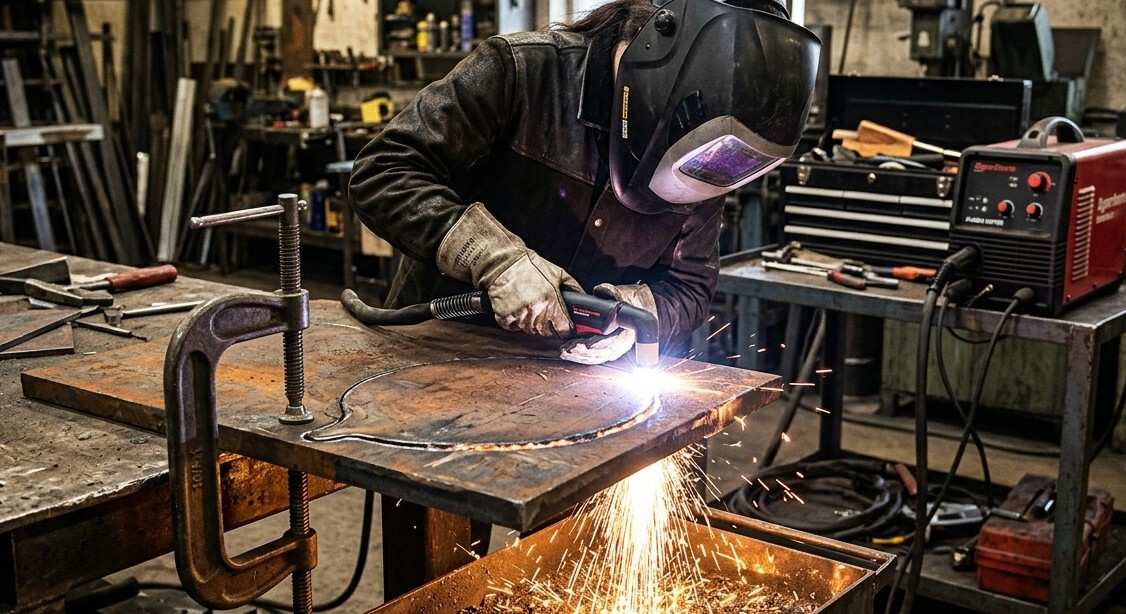
Choosing the right plasma cutter can make a major difference in cutting speed, edge quality, consumable life, and overall operating costs. Whether you are working in metal fabrication, construction, automotive repair, maintenance, or a workshop, the best plasma cutter is not necessarily the one with the highest amperage.
The right choice depends on the metal thickness, material type, cutting frequency, power supply, air requirements, portability, and intended application. This guide explains the key factors to consider when choosing a plasma cutting machine for your specific needs.
1. Determine the Metal Thickness You Usually Cut
The first step when choosing a plasma cutter for metal is identifying the thickness you cut most frequently.
Plasma cutters are available in different amperage ranges, and higher amperage generally provides greater cutting capability. However, choosing a machine solely according to its maximum cutting thickness can lead to poor productivity if you regularly operate it near its limit.
A better approach is to select a plasma cutter whose recommended cutting capacity comfortably covers your normal workload. Manufacturers often distinguish between maximum, quality, and recommended cutting capacities. The recommended capacity is particularly useful because it considers factors such as cut quality, speed, consumable life, and productivity.
For example, if you regularly cut medium-gauge steel but occasionally work with thicker plate, choose a machine designed around your everyday thickness rather than buying a machine based only on an occasional maximum requirement.
2. Choose the Correct Plasma Cutter Amperage
Plasma cutter amperage is one of the most important specifications to compare. Machines are available in different output ranges for light fabrication, general workshop cutting, and heavy-duty industrial applications. Whether you’re comparing models like the ngen-cut100 or other plasma cutters, the key is choosing an output that matches the materials and cutting thickness you handle most often.
Rather than focusing on amperage alone, compare the recommended cutting capacity, duty cycle, and power requirements to ensure consistent performance in your workshop.
3. Consider the Material You Need to Cut
Plasma cutting is suitable for electrically conductive metals such as mild steel, stainless steel, aluminium, and other conductive materials.
When selecting a machine, consider the thickness and type of material you work with most frequently. A model such as the ngen-cut120 can be evaluated alongside other options according to your required cutting capacity and workshop requirements.
Different metals can produce different cutting characteristics, so always follow the manufacturer’s recommended settings for the material and thickness being processed.
4. Check the Duty Cycle
Duty cycle is particularly important for workshops performing continuous or repetitive cutting.
It indicates how long a plasma cutter can operate within a 10-minute period under specified testing conditions. For example, a nominal 50% duty cycle indicates five minutes of operation within a 10-minute period, although actual performance depends on output, ambient temperature, material thickness, and other factors.
If you only perform occasional repairs, a lower-duty-cycle machine may be sufficient. For production fabrication, however, look for a heavy duty plasma cutter with a duty cycle appropriate for your workload.
Also compare how manufacturers establish their ratings because duty-cycle testing conditions are not always identical.
5. Evaluate Power Supply Requirements
Before purchasing a plasma cutter, check whether your workshop has the correct electrical supply.
Important factors include:
- Input voltage
- Single-phase or three-phase power
- Required input current
- Generator compatibility
- Extension cable requirements
A compact portable plasma cutter may be suitable for field repairs and smaller workshops, while larger industrial machines can require substantially more electrical capacity.
If you regularly move between job sites, a dual-voltage plasma cutter can provide additional flexibility where supported by the manufacturer.
6. Check Compressed Air Requirements
Clean, dry, oil-free compressed air is essential for many plasma cutting systems. Poor air quality can affect the arc, cut quality, and consumable life.
Before buying a plasma cutter with air compressor or an external-air model, check the required air pressure and flow rate. Your compressor should be capable of maintaining the required airflow while the cutter is operating.
For mobile work, a plasma cutter with an integrated compressor can simplify transportation and setup. For industrial workshops, an existing compressed-air system may be the more practical option.
7. Compare Cutting Speed and Cut Quality
Maximum thickness is only part of the equation. Plasma cutting speed can have a significant effect on productivity, particularly when cutting large quantities of material.
Look for manufacturer cut charts showing cutting speeds at different amperages and material thicknesses. A machine that can cut your typical material quickly while maintaining acceptable edge quality can reduce grinding, rework, and finishing time.
Correct torch height, travel speed, amperage, gas pressure, and consumable selection also influence the final cut.
8. Consider Torch Design and Portability
Think about how and where you will use the machine.
A handheld plasma cutter is useful for repair work, fabrication, construction, and general workshop applications. If you plan to integrate the machine with a CNC plasma cutting machine, make sure the power supply and torch are compatible with mechanized cutting.
Torch length, ergonomics, cable flexibility, and machine weight are also worth considering. A compact machine may be preferable for field work, while a larger industrial unit can be better suited to fixed production environments.
9. Look at Consumable Costs and Availability
No plasma cutter operates without consumables. Electrodes, nozzles, shields, swirl rings, and other torch components eventually require inspection or replacement.
Therefore, do not evaluate a machine only by its purchase price. Consider the long-term cost of consumables and their expected service life.
Using the correct consumables for the material, thickness, amperage, and plasma gas can improve cut quality and extend component life. Worn consumables should also be replaced before they cause poor cuts or torch damage.
10. Choose Based on Your Application
Your application should ultimately determine which plasma cutter is most suitable. Light workshop work, general fabrication, maintenance, and heavy-duty metal cutting can all require different machine capabilities.
For applications requiring greater cutting capacity, the ngen-cut200 is another option to consider when comparing plasma cutting equipment. Evaluating different models against your material thickness, workload, duty cycle, and operating environment will help you select the most suitable machine.
Final Thoughts
The best plasma cutter is not necessarily the machine with the highest amperage or maximum cutting capacity. It should match your actual workload, material thickness, operating environment, and available power and air supply.
Before purchasing, compare plasma cutter amperage, cutting capacity, duty cycle, cutting speed, power requirements, air consumption, torch design, portability, and consumable costs to find the right balance of performance and long-term value.
For businesses sourcing reliable industrial cutting equipment, Ngen Global can help you explore suitable solutions for different fabrication and workshop requirements. For product specifications, availability, or guidance on selecting the right machine, contact us to discuss your requirements.
Explore More Welding Machine Guides
- What Is ARC/MMA Welding? Process, Uses & Advantages — Learn the basics and applications of ARC/MMA welding.
- Types of Welding Machines: Choose the Right One — A quick breakdown to help you pick the right machine for the job.
- Plasma Welding vs Plasma Cutting: Key Differences for UAE Buyers — Two very different processes, often confused for one.
- Mastering Arc Gouging: Essential Techniques for UAE Welders — Get cleaner, faster gouging results on every job.
- Best Stick Welding Rods in Kenya: Top Brands & Where to Buy — A buyer’s shortlist for reliable stick electrodes.
